

L298N Motor Driver Module Dual H-Bridge Controller
The L298N Motor Driver Module is a dual H-bridge motor controller designed for controlling compatible DC motors and stepper motors in electronics, robotics and automation projects. It allows a microcontroller such as an Arduino or other compatible development board to control motor direction and operation without connecting the motor directly to the controller’s output pins.
The module is based on the L298N dual full-bridge driver, making it possible to control two suitable DC motors independently or operate a compatible stepper motor. This makes it a useful component for students, electronics hobbyists, robotics builders and developers working on motorized projects.
The module is particularly useful in projects where a microcontroller provides control signals while a separate motor supply provides the power required by the motors.
Dual H-Bridge Motor Control
The main feature of the L298N Motor Driver Module is its dual H-bridge configuration.
An H-bridge allows the polarity applied to a motor to be controlled electronically. By changing the control signals, the connected DC motor can be driven in different directions.
The two bridge channels allow the module to control:
| Configuration | Application |
|---|---|
| One DC motor | Direction and speed control |
| Two DC motors | Independent motor control |
| One stepper motor | Compatible stepper-motor control |
| Robotics project | Two-wheel drive systems |
This makes the module particularly useful for small robotic vehicles and other projects requiring controlled motor movement.
Control Two DC Motors
The L298N Motor Driver Module can be used to control two compatible DC motors through its two motor channels.
This configuration is commonly useful for two-wheel robot cars, where one motor drives the left wheel and another drives the right wheel. By controlling the motors separately, the microcontroller can produce forward, reverse and turning movements.
For example, a robotic vehicle can turn by changing the direction or operation of one motor relative to the other.
Direction Control
The module allows the connected motor channels to be controlled through digital input signals from a compatible microcontroller.
By changing the input states, the controller can determine the direction in which a connected DC motor operates.
This makes the L298N useful for projects that require:
- Forward movement
- Reverse movement
- Left and right turning
- Motor stopping
- Independent motor control
The exact control logic depends on the microcontroller program and the way the module is wired.
Motor Speed Control
The L298N module can also be used with PWM control from a compatible microcontroller to regulate the effective speed of a connected DC motor.
PWM, or pulse-width modulation, rapidly switches the control signal to regulate the motor’s average power. This allows a robotics project to adjust motor speed through software.
For example, an Arduino-based robot can use PWM signals to reduce or increase the speed of its motors depending on the program.
Arduino and Microcontroller Projects
The L298N Motor Driver Module is commonly used with Arduino-based projects and other compatible microcontrollers.
A microcontroller provides the control signals while the motor driver handles the motor-control stage. This separation is useful because motors can require more current than a typical microcontroller GPIO pin should supply directly.
The module can therefore serve as an interface between the control electronics and compatible motors.
Robotics Applications
The L298N is a popular component for educational and hobby robotics projects.
It can be used in projects such as:
| Project | Motor Control Application |
|---|---|
| Robot car | Two DC motors |
| Line-following robot | Differential motor control |
| Obstacle-avoidance robot | Drive motor control |
| Bluetooth robot | Wireless motor commands |
| Arduino vehicle | Forward/reverse movement |
| Automated mechanism | Motorized movement |
These applications make the module useful for students learning electronics, robotics and embedded programming.
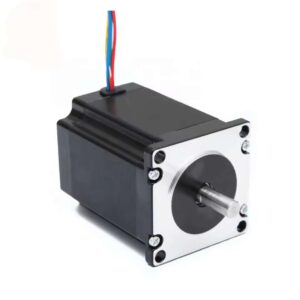
Stepper Motor Applications
The dual bridge arrangement can also be used to control a compatible stepper motor.
Stepper motors are useful where controlled incremental movement is required. They are commonly found in mechanisms involving positioning, rotation and automated movement.
Before connecting a stepper motor, verify that its electrical requirements are compatible with the motor driver’s specifications.
Separate Motor Power and Control
A motor driver provides an important separation between the microcontroller’s control signals and the motor’s power circuit.
The microcontroller sends control signals to the L298N, while the motor supply provides power to the connected motors. This arrangement helps prevent the motor’s power requirements from being supplied directly through the microcontroller’s GPIO pins.
Always use an appropriate motor power source and ensure that the motor and driver are operated within their specified electrical limits.
Suitable for Electronics Learning
The L298N Motor Driver Module is useful for students and beginners learning about motor control, H-bridge circuits, PWM and microcontroller interfacing.
It can be incorporated into practical projects where users need to understand how software commands can control physical movement.
This makes it suitable for:
- Electronics students
- Arduino learners
- Robotics students
- STEM projects
- Engineering projects
- Electronics hobbyists
- DIY automation projects
Key Features
| Feature | Feature |
|---|---|
| L298N motor driver IC | Dual H-bridge configuration |
| Two DC motor channels | Compatible stepper-motor control |
| Motor direction control | PWM speed control |
| Microcontroller interface | Suitable for robotics projects |
| Arduino project compatible | Useful for STEM learning |
Common Applications
The L298N Motor Driver Module can be used in:
- Arduino robot cars
- Two-wheel robotic vehicles
- Line-following robots
- Obstacle-avoidance robots
- Bluetooth-controlled robots
- Motorized mechanisms
- DIY automation
- Electronics experiments
- STEM projects
- Stepper-motor projects

 No products in the cart.
Reviews
There are no reviews yet.