
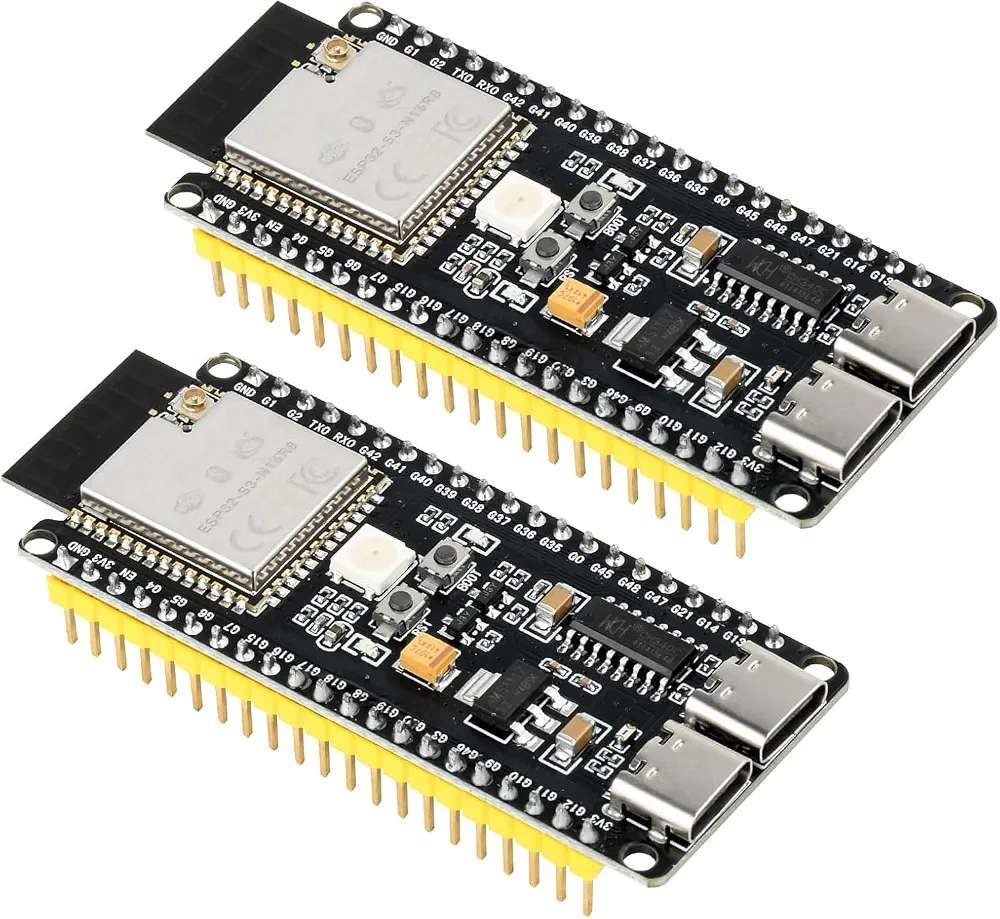

ESP32-S3 Dual Type-C Development Board is a versatile development board for IoT, embedded systems, automation, robotics and wireless electronics projects. It combines the ESP32-S3 platform with Wi-Fi and Bluetooth connectivity, accessible GPIO pins and two USB Type-C ports, giving developers convenient options for programming, communication and USB-based applications.
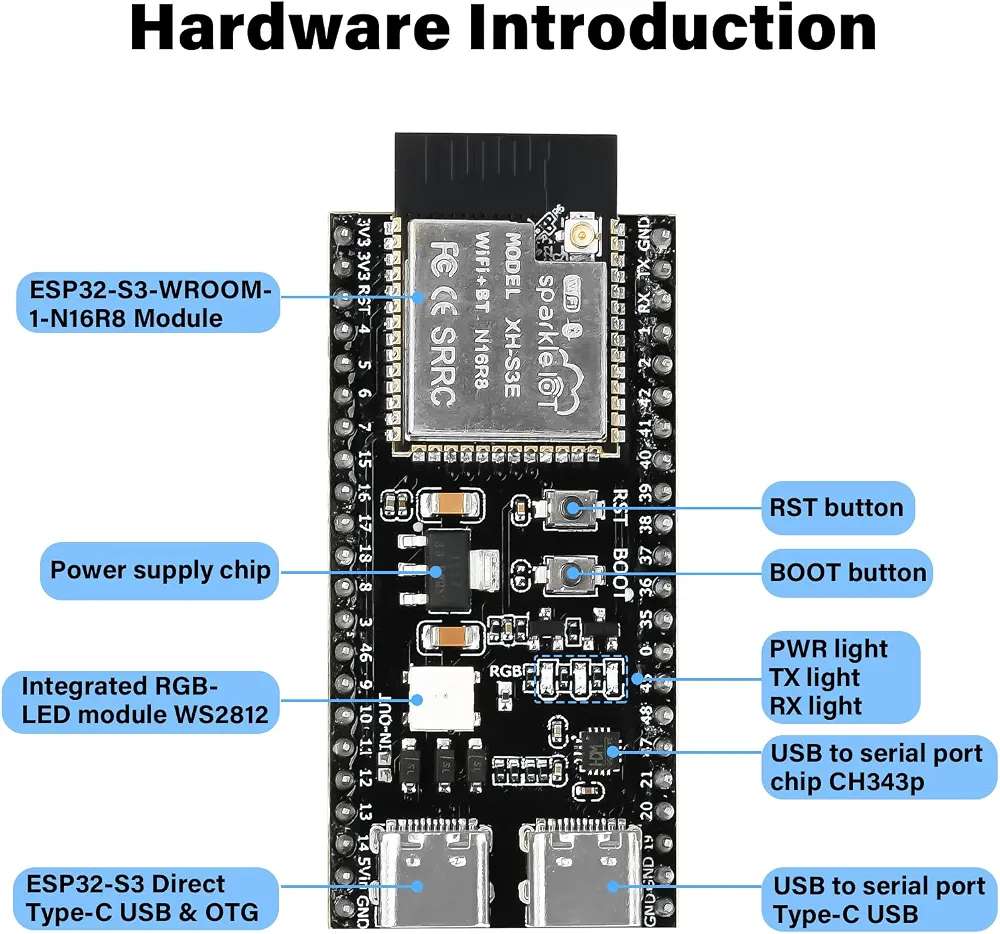
The board shown here uses an ESP32-S3-WROOM-1-N16R8 module and features a compact layout with GPIO headers along both sides. The two Type-C connectors make this board particularly useful for projects that need both a USB-to-serial connection and direct USB functionality.
Key Features
- ESP32-S3-based development board
- Wi-Fi and Bluetooth connectivity
- Dual USB Type-C ports
- USB-to-serial interface using a CH343P chip
- Direct ESP32-S3 USB interface
- USB OTG support
- BOOT button for programming and download mode
- RST button for restarting the board
- Built-in RGB LED
- Power, TX and RX indicator lights
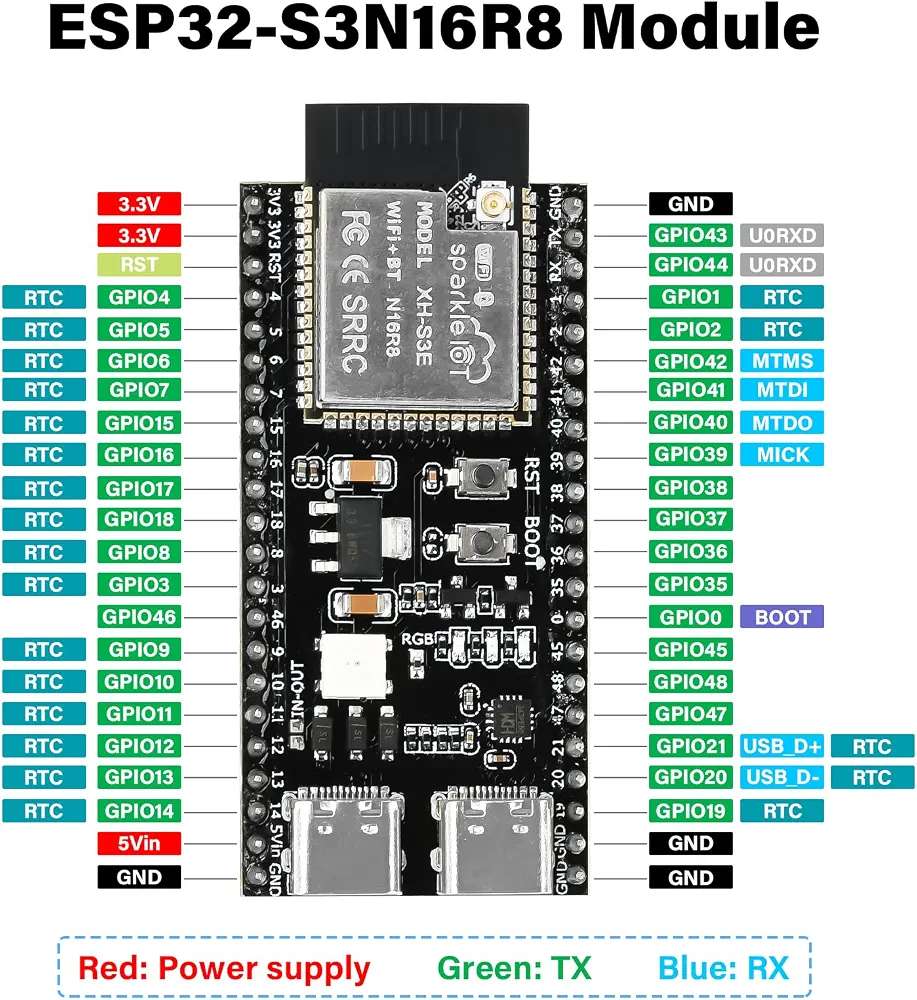
- Multiple GPIO pins available through the headers
- Suitable for breadboard-based prototyping and electronics projects
The ESP32-S3 platform is designed for a wide range of connected and embedded applications. Espressif’s documentation describes the ESP32-S3 development platform as supporting Wi-Fi and Bluetooth Low Energy, while its USB capabilities include USB OTG and USB Serial/JTAG functionality.
Dual USB Type-C Connectivity
One of the main advantages of this ESP32-S3 Dual Type-C Development Board is the two Type-C connectors.
The board provides a USB-to-serial connection through its dedicated interface, while the second Type-C connection provides direct access to the ESP32-S3 USB functionality. This gives developers more flexibility when programming the board, communicating with a computer or experimenting with USB-based projects.
ESP32-S3 Module and Memory
The module shown on the board is marked ESP32-S3-WROOM-1-N16R8. The N16R8 designation indicates a memory configuration associated with the ESP32-S3 module. Espressif’s documentation confirms that ESP32-S3-WROOM module variants are available with different flash and PSRAM configurations, so the exact module marking is important when selecting software and hardware configurations.
GPIO and Prototyping
The board exposes numerous GPIO pins along both sides, making it convenient for connecting sensors, displays, LEDs, motors, relays and other electronic components.
It can be used for prototyping projects involving:
- IoT devices
- Wireless sensors
- Home automation
- Robotics
- USB projects
- Smart devices
- Embedded control systems
- Electronics experimentation
- ESP32-S3 programming and development
BOOT and RST Buttons
The board includes dedicated BOOT and RST buttons. The BOOT button can be used when placing the ESP32-S3 into download/programming mode, while the RST button allows the board to be restarted during development and testing.
Built-In RGB LED
An integrated RGB LED provides a convenient way to add visual status indications to your projects without requiring an external LED for basic testing.
Who Is This Board For?
The ESP32-S3 Dual Type-C Development Board is suitable for students, electronics hobbyists, IoT developers, robotics enthusiasts and engineers working on ESP32-based prototypes. It is also useful for learning how wireless connectivity, GPIO control and USB interfaces can be combined in embedded projects.
For official technical information about ESP32-S3 development boards and their USB, GPIO and programming features, see the official Espressif ESP32-S3 documentation.



 No products in the cart.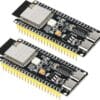
Reviews
There are no reviews yet.